Solar Panel Maintenance in Florida: What You Actually Need to Know
You’ve made a smart investment by going solar — now let’s make sure it keeps performing at its best. The good news? Solar panels are one of the lowest-maintenance energy systems you can own. But a little attention goes a long way toward maximizing your savings for decades to come.
Here’s your complete guide to solar panel maintenance in Florida.
How Much Maintenance Do Solar Panels Actually Need?
The short answer: very little. Solar panels have no moving parts, which means there’s almost nothing that can break down or wear out. Most modern panels are designed to last 25–30 years with minimal intervention.
That said, Florida’s unique climate — heat, humidity, heavy rain, pollen, and the occasional hurricane — means a few simple maintenance habits can make a real difference in your system’s performance.
1. Keep Your Panels Clean
Dust, pollen, bird droppings, and tree debris can build up on your panels over time and reduce their efficiency. In Florida, pollen season (February through May) is the biggest culprit.
What to do:
- Rinse your panels with a garden hose every few months — early morning or late evening when panels are cool
- Avoid high-pressure washers, which can damage the surface
- Never use abrasive cleaners or scrub brushes
- Florida’s frequent rainstorms actually do a lot of the cleaning for you
Pro tip: If you notice a sudden dip in energy production, dirty panels are usually the first thing to check.
2. Trim Nearby Trees
As trees grow, new branches can create shade over your panels — and even partial shading can significantly reduce output. Florida’s fast-growing vegetation means this is worth checking every year.
What to do:
- Trim back any branches that cast shadows on your panels, especially during peak sun hours (10 AM – 3 PM)
- Keep an eye on palm trees and oaks near your roofline
- Falling branches during storms can also cause physical damage — prevention is key
3. Monitor Your System’s Performance
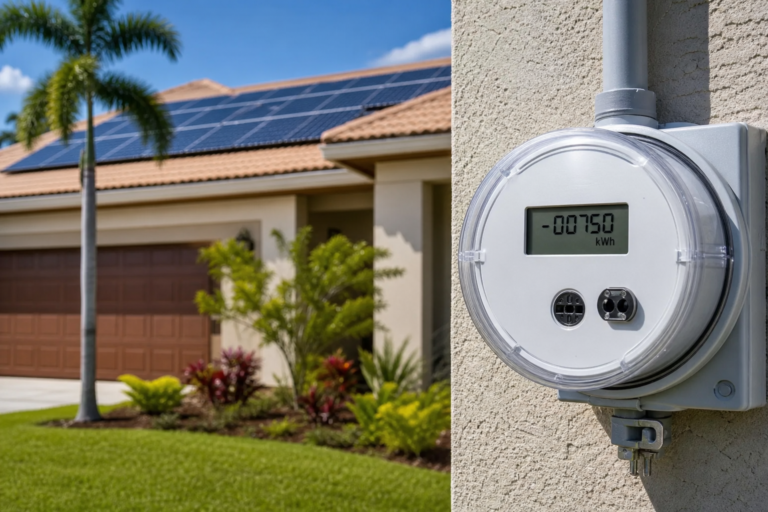
Most modern solar systems come with a monitoring app or dashboard that shows you exactly how much energy you’re producing. This is your best early warning system for any issues.
What to watch for:
- A sudden or gradual drop in energy production
- One panel producing significantly less than others
- Error messages or alerts from your inverter
If something looks off, it’s usually a simple fix — a dirty panel, a tripped breaker, or a loose connection. But catching it early prevents lost savings.
4. Schedule a Professional Inspection
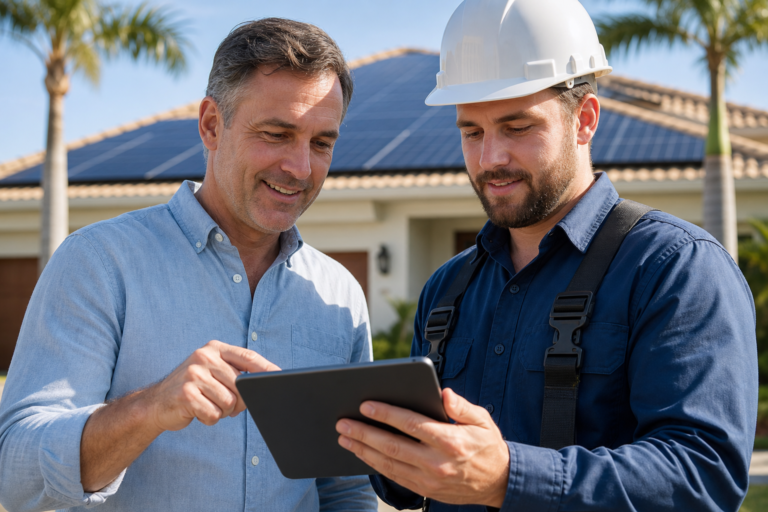
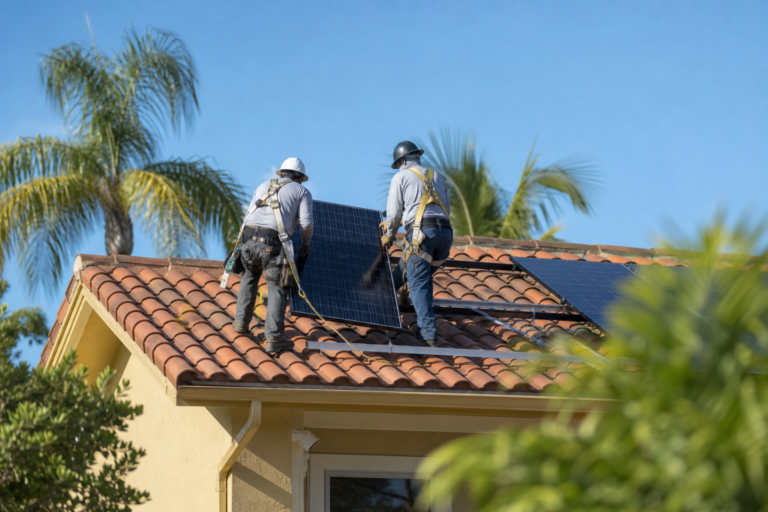
While day-to-day maintenance is minimal, it’s smart to have a professional inspect your system once a year. A qualified solar technician will check:
- All electrical connections and wiring
- Inverter performance and error logs
- Mounting hardware and roof penetrations
- Panel surface condition
- Overall system efficiency vs. expected output
Think of it like an annual physical for your solar system — quick, affordable, and worth the peace of mind.
5. Florida Weather: What You Need to Know
Florida’s weather is both your solar system’s greatest asset and its biggest challenge. Here’s how to handle it:
Hurricane season (June–November):
- Modern solar panels are rated to withstand winds up to 150+ mph
- The mounting systems are engineered specifically for high-wind zones
- After any major storm, do a visual inspection for debris or damage
- Contact your installer if you notice cracked glass, loose mounts, or exposed wiring
Heat and humidity:
- Solar panels actually lose a small amount of efficiency in extreme heat
- Good installation includes proper airflow between panels and your roof to minimize heat buildup
- Florida’s humidity can cause condensation, but quality panels are sealed and weather-rated to handle it
Lightning:
- Your solar system should include proper grounding and surge protection
- A whole-home surge protector adds an extra layer of safety
- Lightning damage is typically covered by homeowners insurance
6. Know Your Warranty
Most solar panels come with two types of warranties:
- Product warranty (10–25 years): Covers manufacturing defects and hardware failures
- Performance warranty (25–30 years): Guarantees your panels will still produce at least 80–85% of their rated output after 25 years
Keep your warranty documentation accessible and understand what’s covered. Regular maintenance — especially professional inspections — can also be a warranty requirement.
The Bottom Line: Solar Is Low-Maintenance, Not No-Maintenance
A few simple habits — rinsing your panels, trimming trees, monitoring your app, and scheduling an annual checkup — are all it takes to keep your solar system running at peak performance for decades.
At Direct Solar Point, we don’t disappear after installation. We’re here for the long haul, with ongoing support, maintenance guidance, and professional inspections when you need them.
Have questions about your solar system’s performance?
👉 Contact Direct Solar Point for a free system checkup or to learn more about our maintenance plans.
Direct Solar Point provides honest, stress-free solar solutions for homeowners and small businesses throughout Florida. From installation to long-term maintenance, we’re your trusted solar partner.