How to Choose the Right Solar Installer in Florida
The solar panels on your roof matter less than the company that puts them there. It’s a hard truth of the solar industry: most bad solar experiences — leaks, underperforming systems, dead warranties, disappearing companies — trace back to choosing the wrong installer, not the wrong equipment.
Florida’s solar boom has attracted excellent local companies. It has also attracted door-knocking sales operations that subcontract everything and vanish when problems appear. Here’s how to tell the difference before you sign.
1. Verify the License — Not Just the Claim
In Florida, solar installations must be performed by a state-certified solar contractor (CVC license) or a certified electrical contractor. Ask for the license number and verify it yourself on the Florida DBPR website (myfloridalicense.com).
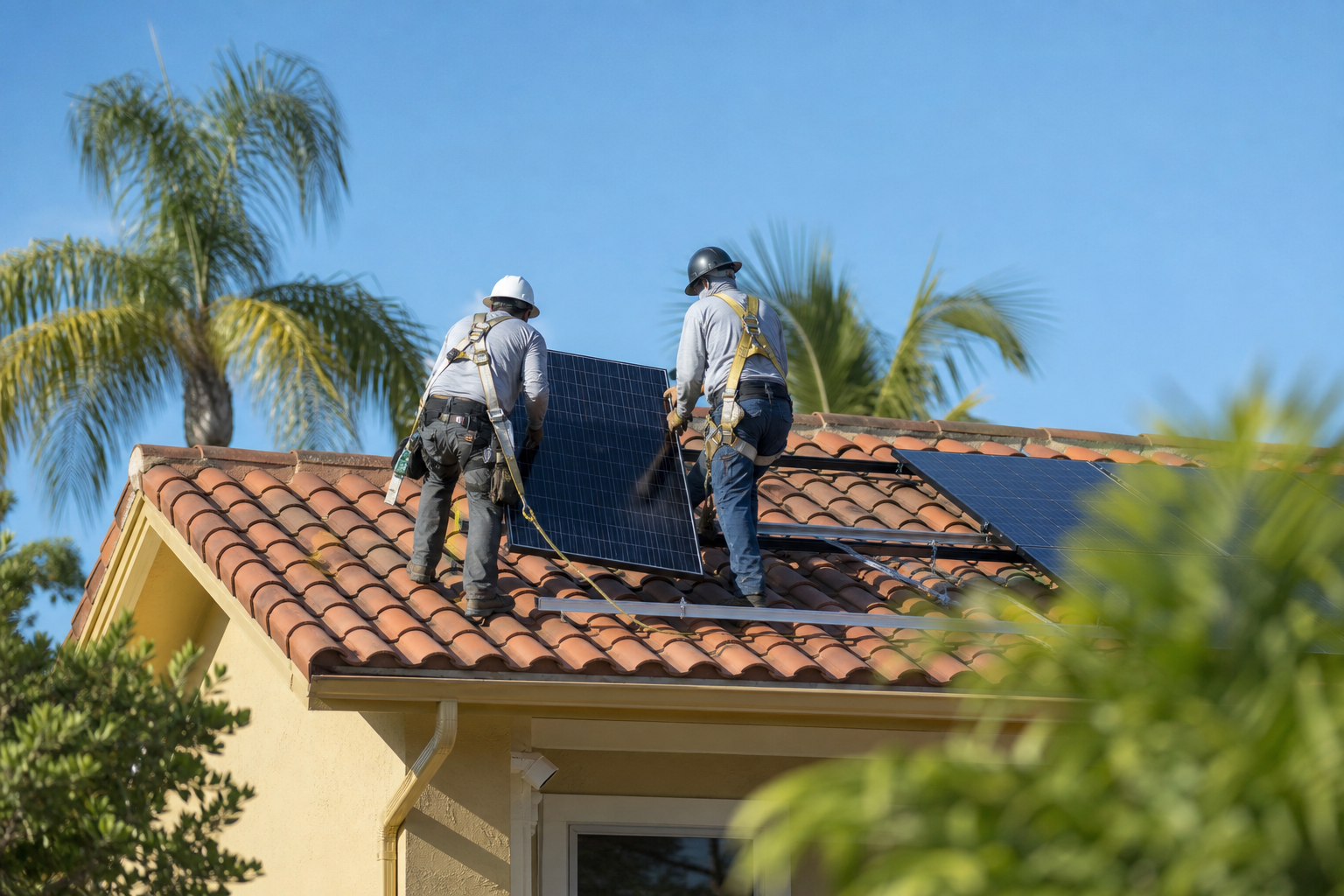
Red flag: a “solar company” that is actually a sales organization holding no license at all, subcontracting your installation to the lowest bidder. Ask directly: “Who physically installs the system, and whose license covers the work?”
2. Demand Proof of Insurance
Your installer should carry both general liability insurance and workers’ compensation. If an uninsured worker is injured on your roof, you could be liable. Reputable companies provide certificates of insurance without hesitation.
3. Scrutinize the Warranties — All Three of Them
Solar systems come with three separate warranties, and confusing them is where homeowners get burned:
- Panel performance warranty — Usually 25 years from the manufacturer
- Inverter warranty — Typically 10–25 years depending on the technology
- Workmanship warranty — Covers the installation itself, including roof penetrations. This one comes from the installer, and it’s only as good as the company behind it
A 25-year workmanship warranty from a company that’s two years old and heavily leveraged may be worth less than a 10-year warranty from an established local contractor.
4. Ask How They Protect Your Roof
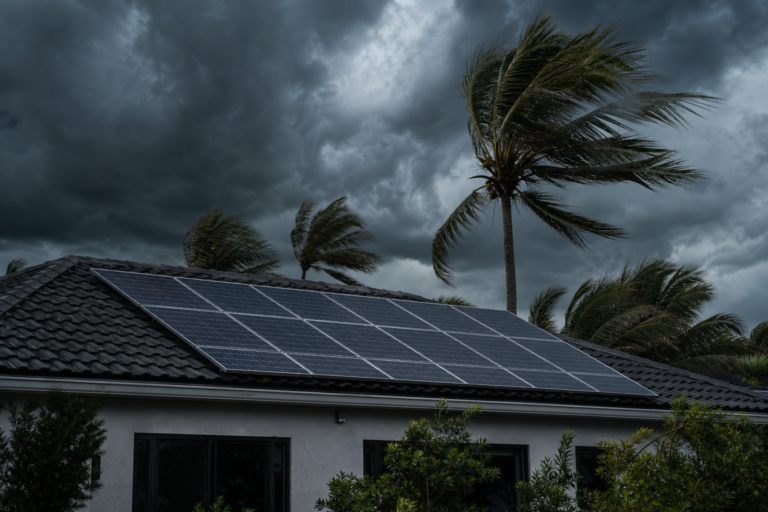
Every solar installation penetrates your roof — and in Florida, where roofs already battle hurricanes and torrential rain, flashing and sealing quality is everything. Ask what mounting and waterproofing system they use, and whether the installation affects your existing roof warranty. If your roof is nearing the end of its life, address that first; a good installer will tell you so honestly. (Wondering whether your home is even a good fit? Start with our guide on whether your Florida home is a good candidate for solar.)
5. Compare Real Production Estimates, Not Promises
Any quote should include a production estimate (in kWh per year) based on your actual roof orientation, tilt, and shading — not a generic promise like “eliminate your power bill.” Get multiple quotes and compare the assumptions, not just the price. If one estimate is dramatically rosier than the others, ask why.
6. Check Reviews Where It’s Hard to Fake Them
- Google reviews — Read the negative ones and, more importantly, how the company responded
- BBB complaints — Look for patterns: missed deadlines, unreturned calls, warranty dodging
- Local references — Ask for customers in your area whose systems are at least a year old
7. Beware These High-Pressure Tactics
- “This price expires today” — Legitimate quotes don’t evaporate overnight
- “Free solar from the government” — There is no free solar; there are incentives that reduce real costs
- Lease-only pitches — If they won’t discuss ownership options, they’re optimizing for their margin, not your savings
- Vague paperwork — Every number discussed verbally should appear in the written contract
The Right Installer Makes Solar Simple
Done right, going solar in Florida is one of the best investments a homeowner can make — our post on the top benefits of going solar in Florida covers exactly why. The key is partnering with a company that will still answer the phone in year fifteen.
👉 Contact Direct Solar Point for a free assessment. We’ll give you straight answers, verifiable credentials, and a quote you can hold us to — no pressure, no games.
Direct Solar Point helps Florida homeowners go solar with honest guidance, quality installations, and no high-pressure sales tactics.