How Much Do Solar Panels Cost in Florida in 2026? A Complete Breakdown
If you’re a Florida homeowner thinking about going solar, the first question on your mind is probably: how much is this going to cost?
The honest answer is that it depends on your home, your energy usage, and the system you need. But unlike a few years ago, the numbers are now firmly in the homeowner’s favor. Between dropping equipment costs, strong federal incentives, and Florida-specific tax exemptions, solar has never been more affordable.
At Direct Solar Point, we believe in full transparency — no inflated quotes, no bait-and-switch pricing. Here’s a straightforward breakdown of what solar actually costs in Florida in 2026.
Average Solar Panel System Cost in Florida
For a typical Florida home, here’s what you’re looking at:
- Average system size: 8–12 kW (based on typical energy usage and AC demands)
- Cost per watt (before incentives): $2.50–$3.20
- Total system cost (before incentives): $20,000–$38,400
- After 30% federal tax credit: $14,000–$26,880
Most Florida homeowners end up in the $16,000–$24,000 range after the federal tax credit for a system that covers 80–100% of their electricity needs.
What’s Included in That Price
A reputable solar installer’s quote should include everything — not just the panels. Here’s what a complete system typically includes:
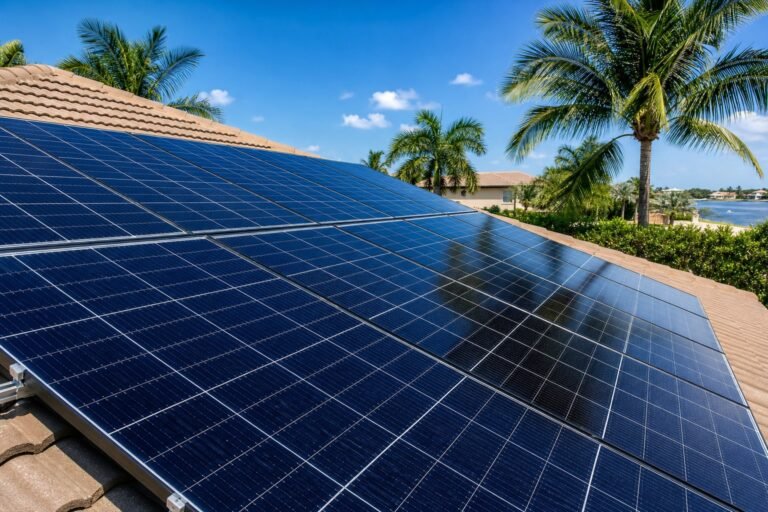
- Solar panels — the modules themselves (usually 20–30 panels for a residential system)
- Inverter(s) — converts DC power from panels to AC power for your home
- Racking and mounting — the hardware that secures panels to your roof
- Electrical work — wiring, conduit, disconnect switches, and meter upgrades
- Permitting and inspections — required by Florida building codes and your utility
- Interconnection — connecting your system to the grid for net metering
- Monitoring system — app or web dashboard to track your production in real time
- Warranty coverage — typically 25 years on panels, 12–25 years on inverters
If a quote seems unusually low, check what’s missing. Some companies exclude permitting, electrical upgrades, or monitoring — then add them as extras later.
Incentives That Lower Your Cost
Florida is one of the best states in the country for solar incentives. Here’s what’s available in 2026:
Federal Solar Investment Tax Credit (ITC) — 30%
This is the biggest single incentive. You can claim 30% of your total system cost as a credit on your federal income taxes. For a $24,000 system, that’s $7,200 back. This credit is available through at least 2032.
Florida Sales Tax Exemption
Solar equipment is exempt from Florida’s 6% sales tax. On a $24,000 system, that’s $1,440 you don’t have to pay — automatically applied at purchase.
Florida Property Tax Exemption
Solar panels increase your home’s value by an average of 4%. But in Florida, that added value is 100% exempt from property taxes. You get the resale benefit without the tax hit.
Net Metering
When your panels produce more electricity than you use, the excess goes to the grid and you earn credits on your utility bill. Most Florida utilities — including FPL, Duke Energy, and TECO — offer net metering at full retail rate.
What Affects Your Specific Price
Not every home is the same. These factors will move your price up or down:
- System size — More panels = higher cost, but also more savings. We size your system based on actual usage.
- Roof complexity — Multiple roof planes, steep pitches, or tile roofs cost more to install than a simple asphalt shingle roof.
- Equipment choice — Premium panels (like REC or SunPower) cost more but produce more per square foot and come with longer warranties.
- Inverter type — String inverters are cheaper. Microinverters cost more but perform better in partial shade and offer panel-level monitoring.
- Electrical upgrades — Older homes may need a panel upgrade to support solar. This can add $1,500–$3,000.
- Battery storage (optional) — Adding a home battery for backup power costs $10,000–$15,000 additional but qualifies for the 30% tax credit too.
Financing Options
You don’t need to pay cash upfront. Most Florida homeowners finance their solar system using one of these options:
Solar Loan
The most popular option. Fixed monthly payments, typically lower than your current electric bill. You own the system from day one and get all the tax credits. Loan terms range from 10–25 years.
Cash Purchase
Highest long-term savings. No interest payments. You keep 100% of the energy savings and tax credits. Typical payback period: 5–8 years, followed by 20+ years of free electricity.
Lease or PPA (Power Purchase Agreement)
Lower or no upfront cost, but you don’t own the system and you don’t get the tax credits. Monthly payments to the leasing company. We generally recommend ownership (loan or cash) for the best financial outcome.
Real Example: What a Typical Florida Homeowner Pays
Here’s a realistic scenario for a 3-bedroom home in Central Florida with a $200/month electric bill:
- System size: 10 kW
- Gross cost: $28,000
- Federal tax credit (30%): -$8,400
- Net cost: $19,600
- Monthly loan payment (20-year): ~$135/month
- Previous electric bill: $200/month
- New electric bill: ~$15/month (grid fees)
- Net monthly savings: $50/month from day one
After the loan is paid off, that $200/month in electricity becomes almost free — for the remaining life of the system.
Get Your Free Custom Quote
The only way to know exactly what solar will cost for your home is to get a customized evaluation. At Direct Solar Point, our quotes are free, detailed, and pressure-free. We’ll show you the real numbers — system size, cost, savings, and payback — based on your actual home and energy usage.
👉 Contact Direct Solar Point today to schedule your free solar evaluation and see exactly what solar will cost — and save — for your Florida home.
Direct Solar Point provides honest, affordable solar solutions for Florida homeowners and small businesses. No high-pressure sales. No hidden fees. Just smarter energy.