Solar Battery Storage: Is It Worth It for Florida Homeowners?
Solar panels generate electricity during the day — but what about at night, during storms, or when the grid goes down? That’s where solar battery storage comes in. And in Florida, where power outages from hurricanes, thunderstorms, and grid overload are a regular occurrence, the appeal of having backup power is easy to understand.
But solar batteries are also a significant investment. At Direct Solar Point, we believe in giving homeowners the full picture so you can decide whether battery storage makes sense for your situation.
How Solar Battery Storage Works
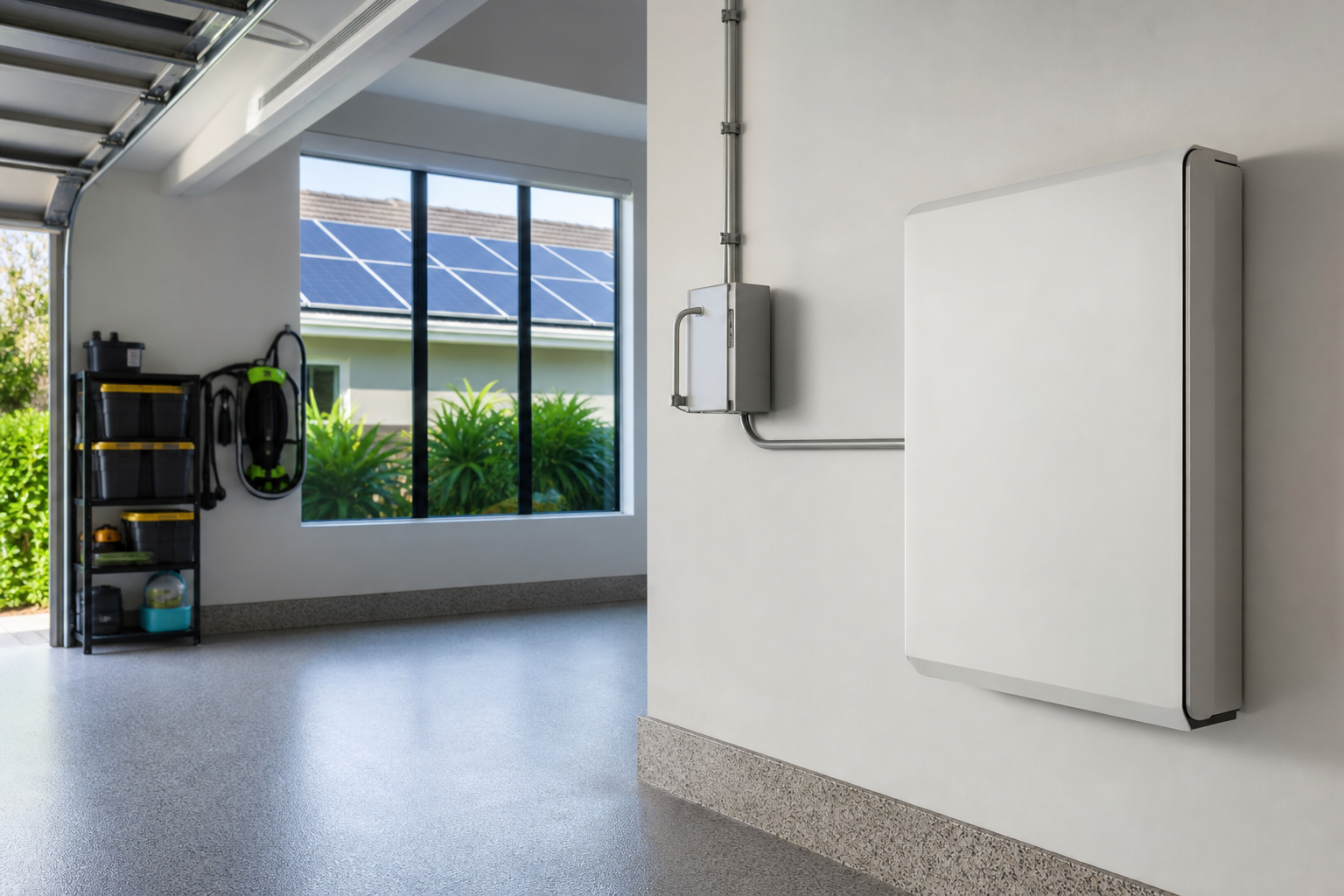
A home battery system stores excess electricity generated by your solar panels during the day. Instead of (or in addition to) sending that excess power to the grid via net metering, the energy is stored in a battery for use later.
During the day: Your solar panels power your home and charge the battery with excess production.
In the evening: When solar production drops, your home draws from the battery before pulling from the grid.
During a power outage: The battery automatically switches on, providing backup power to your essential circuits — lights, refrigerator, Wi-Fi, phone charging, and potentially your AC.
Most home batteries pair with an existing solar system, though some can be installed standalone.
What Does a Solar Battery Cost?
Here are the current price ranges for popular home battery systems:
- Tesla Powerwall 3: $12,000–$15,000 installed
- Enphase IQ Battery 5P: $10,000–$14,000 installed
- Franklin WH aPower2: $11,000–$15,000 installed
- Generac PWRcell: $10,000–$14,000 installed
These prices include the battery unit, installation, and electrical work. Most systems provide 10–15 kWh of usable storage — enough to power essential circuits for 8–12 hours.
The 30% federal tax credit applies to batteries too. A $14,000 battery installation becomes approximately $9,800 after the tax credit — making batteries significantly more affordable than they were a few years ago.
The Case FOR Battery Storage in Florida
1. Backup Power During Outages
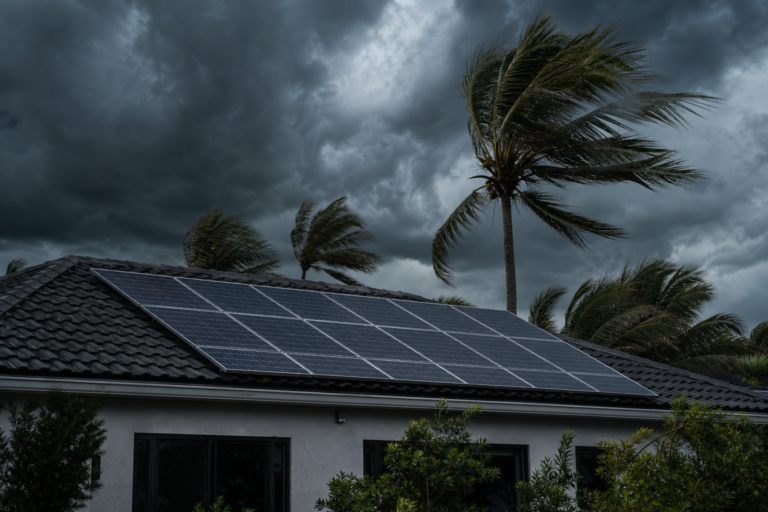
Florida ranks among the top states for power outages. Between hurricane season (June–November), daily summer thunderstorms, and an aging grid infrastructure, losing power is common. A battery keeps your essential systems running when the grid goes down — no generator required.
2. No Generator Hassles
Unlike gas or propane generators, a solar battery:
- Starts automatically — no manual startup in the middle of a storm
- Runs silently — no engine noise
- Requires no fuel — recharges from your solar panels the next day
- Needs minimal maintenance — no oil changes, fuel stabilizer, or mechanical upkeep
- Can be installed indoors — no carbon monoxide risk
3. Peace of Mind
For many Florida homeowners — especially those with medical equipment, home offices, or young children — knowing the power won’t go out is worth the investment. A battery plus solar gives you genuine energy independence.
4. Future-Proofing
If net metering policies change in the future (and there have been attempts to reduce net metering benefits in Florida), battery storage becomes more valuable because you can store and use your own solar energy instead of depending on grid credits.
The Case AGAINST Battery Storage (For Now)
1. Net Metering Already Handles Excess Energy
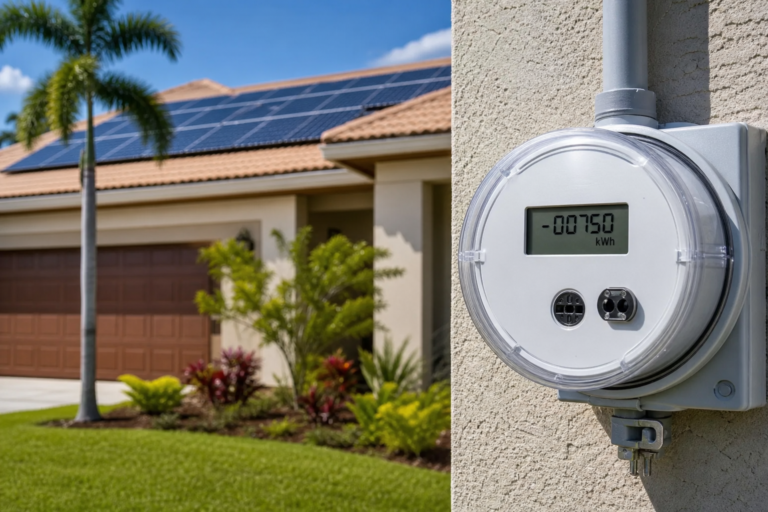
Florida’s current net metering policy lets you send excess solar to the grid and get credits at the full retail rate. The grid effectively acts as a free, unlimited battery. If saving money is your primary goal and outages don’t concern you, net metering alone may provide most of the financial benefit.
2. The Payback Period Is Long
At current prices, a battery alone takes 10–15 years to pay back through energy savings — compared to 5–8 years for solar panels alone. The financial return on batteries is improving but isn’t as clear-cut as solar panels.
3. Limited Capacity
A single battery can power essential circuits for 8–12 hours — but it can’t run your entire home, including AC, for days at a time. During an extended outage, you’d need to manage your usage carefully. Multiple batteries increase capacity but also increase cost.
Who Should Get a Battery?
Battery storage makes the most sense if:
- You experience frequent or extended power outages
- You have medical equipment that requires uninterrupted power
- You work from home and can’t afford to lose connectivity
- You live in a hurricane-prone coastal area
- You want full energy independence and peace of mind
- You’re building new and can include the battery in your mortgage/financing
Battery storage may not be necessary if:
- You rarely experience power outages
- Your primary goal is saving money on your electric bill (solar + net metering handles this)
- Budget is tight and you’d rather maximize your solar panel system first
Our Recommendation
For most Florida homeowners, we recommend starting with solar panels and net metering. This gives you the strongest financial return with the fastest payback period.
If backup power is important to you — and in Florida, it often is — adding a battery is an excellent upgrade that provides real, tangible benefits beyond just saving money. Think of it less as a financial investment and more as an insurance policy that also saves you money.
And because batteries qualify for the 30% federal tax credit, now is one of the best times to add storage to your solar system.
Get a Custom Battery + Solar Quote
We’ll assess your energy usage, outage history, and priorities — then recommend the right combination of solar and storage for your home and budget.
👉 Contact Direct Solar Point today to schedule your free solar and battery evaluation. We’ll show you the real numbers — no pressure, no fluff.
Direct Solar Point provides honest, affordable solar solutions for Florida homeowners and small businesses. No high-pressure sales. No hidden fees. Just smarter energy.